
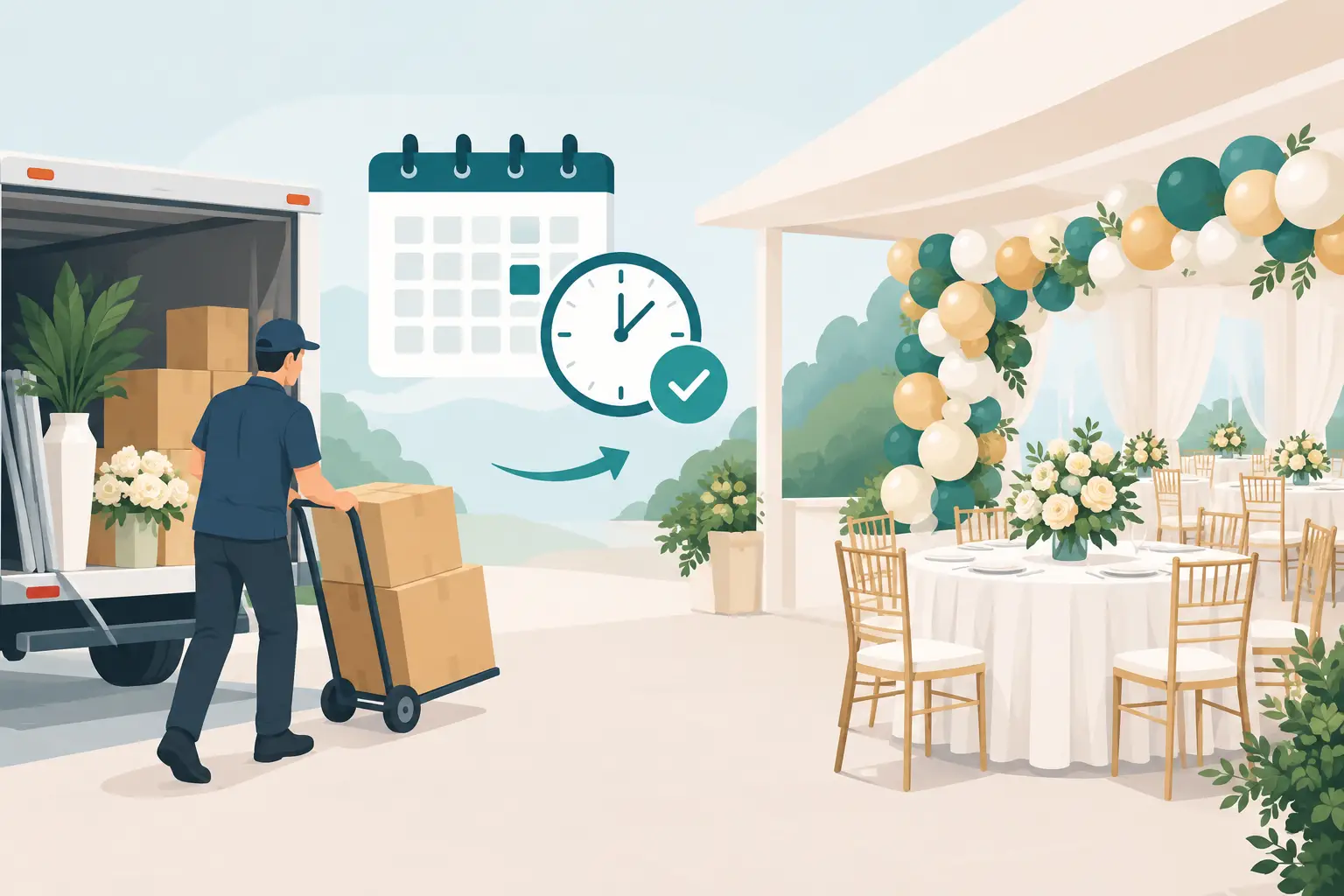
The room can be booked, the cake can be ordered, and the guest list can be set – but one timing question can still make a host nervous: when should event decor arrive? Bring it in too early and you may be paying for extra venue hours or risking damage. Leave it too late and the most exciting part of the celebration can become a rushed setup.
For most parties, décor should be fully installed and photo-ready one to two hours before guests arrive. That window gives you time to walk into a finished space, place food and favors, greet vendors, take family photos, and handle the small surprises that seem to appear before every celebration. The exact arrival time, however, depends on the venue, the size of the installation, and whether guests will see the transformation happen.
When Should Event Decor Arrive? Start With the Guest Arrival Time
Work backward from the moment your first guest is expected. If a birthday party begins at 2:00 p.m., aim to have the main backdrop, balloon garland, cake stand, cutouts, and styled details complete by 12:30 or 1:00 p.m. This is especially helpful for family celebrations, where the guest of honor may want photos before little hands explore the setup or before the room becomes busy.
A simple tabletop arrangement in a private home may only need a short setup window. A full statement backdrop with custom colors, layered balloons, themed props, signage, and coordinated party favors needs more time. The goal is not simply to have items delivered before the party. It is to have every detail placed intentionally, safely secured, and ready to photograph.
For a small home party, decorators often need access about two to three hours before guests arrive. For a larger venue, milestone event, or corporate gathering, four or more hours can be more realistic. Complex installs may also require additional time for loading, parking, venue check-in, and moving pieces through elevators or long hallways.
Arrival Time Is Not the Same as Setup Time
One of the easiest planning mistakes is treating delivery and installation as the same thing. A decorator arriving at 11:00 a.m. does not mean the display will be finished at 11:05. Beautiful event décor is built in layers: the area is assessed, the backdrop is positioned, balloon décor is installed, props are arranged, and finishing pieces are adjusted for balance and photos.
That creative process is what turns a few party elements into a focal point. It also deserves enough breathing room. If the cake table needs to sit in front of the backdrop, for example, the setup may need to pause until the table arrives or the caterer confirms placement. If a client has a special outfit that inspired the color palette, a final check can make sure the setting complements the look rather than competing with it.
Ask your decorator two separate questions: what time will the team arrive, and what time will the décor be completely ready? Those answers give you a much clearer event-day plan.
A Good Timing Rule for Common Celebrations
For many birthdays, baby celebrations, graduations, anniversaries, and family gatherings, plan for the décor to be finished 60 to 90 minutes before guests arrive. This leaves room for photos with the guest of honor, final food setup, and a calm welcome.
For corporate events, showers, or parties with multiple vendors, aim for completion 90 minutes to two hours before doors open. These events often have more moving parts, including branded materials, guest registration, catering, audiovisual equipment, and staff arrivals.
If the event begins immediately after a ceremony, presentation, or another activity in the same space, add extra time. The room may not be accessible as early as you expect, and every vendor may be working within a tight turnover window.
Let the Venue Set the Earliest Possible Time
Your venue’s access policy is often the deciding factor. Before booking décor, confirm when vendors can enter, whether setup must be completed by a certain time, and whether teardown must happen immediately after the event. Some halls allow entry only a few hours before the booking. Others may charge for early access or require advance approval for outside decorators.
It also helps to ask practical questions early. Is there a loading entrance? Are there stairs, elevators, or a long walk from the parking area? Can anything be attached to walls? Is there a preferred location for the backdrop? A venue may look spacious online but have limited room around doorways, serving tables, or dance floors.
At-home parties offer more flexibility, but they need a plan too. Clear a path from the entrance to the setup area, keep pets away during installation, and decide where the centerpiece will sit before the decorator arrives. If children are home, consider scheduling setup while they are out for lunch or enjoying another activity. The reveal feels more magical, and the work can be completed without curious interruptions.
Weather and Outdoor Setups Need More Buffer
Outdoor celebrations are beautiful, but timing deserves extra care. Wind, heat, rain, uneven ground, and direct sun can all affect where décor can safely go and how long installation takes. A backyard setup may need adjustments once the decorator sees the space on the day of the event.
For an outdoor party, try to schedule installation as close to the start time as practical while still allowing for a calm setup and photos. Shade is valuable for both guests and décor, so think about where sunlight will fall during the actual party hours, not just during morning setup.
Always have a backup location. That might be a covered patio, garage, tent, community room, or a clear indoor wall that can still create a beautiful photo moment. A flexible plan protects your celebration from becoming a weather watch.
Coordinate Décor With the Other Vendors
The best event setups happen when everyone knows where they fit. Your decorator should know whether catering needs access to the same wall, whether a photographer wants a certain photo area, and whether a DJ or speaker setup will be nearby. The same is true for the cake and dessert table: it is much easier to style a display when its final location is confirmed.
Avoid scheduling every vendor for the same narrow 30-minute window. If possible, let larger décor pieces go in first, then have rental items, desserts, florals, or food arrive afterward. This prevents a crowded room and gives each vendor room to do their work well.
For handmade favors, consider delivery or placement after the main installation is complete. They can then be displayed neatly at each place setting, near the exit table, or beside the centerpiece without getting moved during setup.
Build in Time for the Moments You Actually Want
A finished room before guests arrive is not only about avoiding stress. It gives you a chance to enjoy the celebration you planned. You can take photos with your child before the party begins, capture a quiet anniversary moment, or see your company branding displayed exactly as imagined before the crowd arrives.
That buffer also protects the details people often remember: a straightened welcome sign, a cake stand centered beneath the backdrop, favors arranged with care, and a color palette that feels thoughtful from every angle. These touches are small on their own, yet together they make the event feel complete.
A Final Pre-Event Timing Check
A few days before the party, confirm the event address, venue access time, contact person, setup location, guest arrival time, and any changes to the design. Have the balance payment, parking instructions, and venue rules sorted in advance when applicable. On event day, keep your phone nearby, but give your decorator the space to create.
The best answer to when should event decor arrive is this: early enough for the space to feel calm, polished, and fully yours before the first guest walks in. With a clear timeline and a decorator who listens to your vision, the setup becomes one less thing to manage and one more reason to look forward to the celebration.
Leave a Reply