
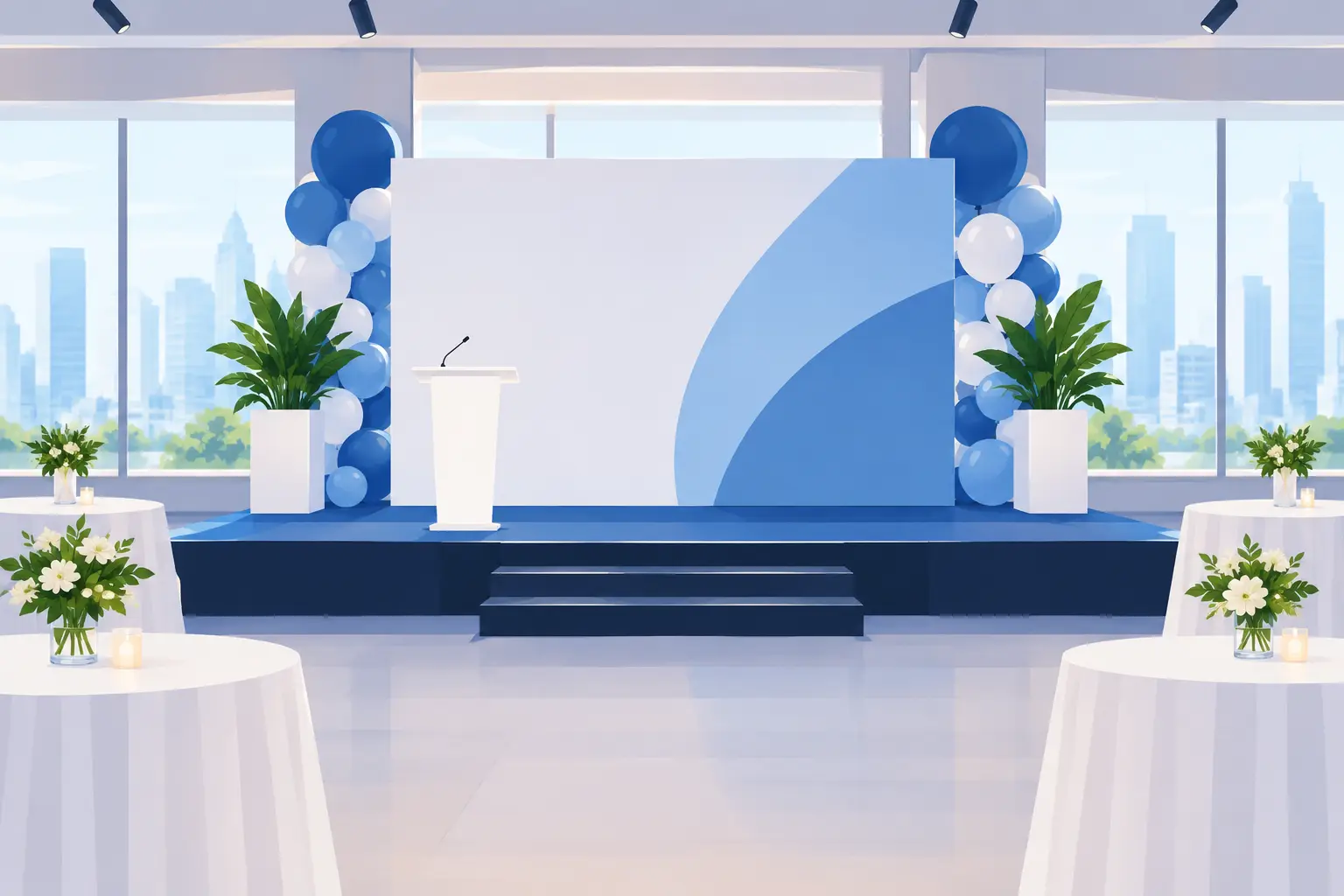
A strong corporate launch decor example does more than fill a room with brand colors. It gives guests an immediate sense of what they are celebrating, creates a polished place for photos, and makes the event feel thoughtfully planned from the first welcome to the final conversation.
For a business launch, product reveal, office opening, or team milestone, decor should support the moment without competing with it. The goal is not to make every corner busy. It is to create a few high-impact visual moments that feel aligned, welcoming, and ready for the camera.
A corporate launch decor example for an 80-guest event
Imagine a local business introducing a new service at an evening reception for clients, partners, and team members. The event takes place in a modern studio space with white walls, large windows, and a welcome table near the entrance. The company has a clean brand palette of navy, soft blue, white, and a small amount of metallic gold.
Instead of scattering decorations throughout the venue, the design centers on three intentional areas: a branded entrance, a feature backdrop for photos and remarks, and a styled refreshment table. This gives the launch a cohesive look while allowing guests room to mingle comfortably.
At the entrance, a layered balloon garland frames a welcome sign with the company logo and launch date. Navy provides the visual anchor, while soft blue and white keep the arrangement fresh. Gold accents are used sparingly so they read as celebratory rather than overly formal. A pair of simple plinths at different heights can hold a floral arrangement, product display, or framed message from the founders.
The main photo moment sits behind the speaking area. A clean paneled backdrop in the brand’s lightest color is paired with an oversized logo, custom cutout lettering, and a structured balloon installation that climbs one side rather than covering the entire wall. This asymmetrical approach leaves room for team photos and prevents the backdrop from looking crowded when several people stand in front of it.
Across the room, the refreshment table repeats the same visual language. A coordinating table cover, branded favor tags, cake stands, and a few small accent pieces make the table feel connected to the backdrop without duplicating it exactly. Guests see a complete event design, not three unrelated decorated corners.
Start with the message guests should feel
Before choosing colors, ask one simple question: what should guests understand or feel within the first few minutes? A startup launch may call for energy and confidence. An office anniversary may feel warm, grateful, and team-focused. A luxury product release may need a quieter palette, refined materials, and more open space.
That emotional direction helps determine the right level of decor. A bold brand may suit saturated color, larger cutouts, and statement installations. A professional services firm might prefer a neutral backdrop with one strong branded feature. Both can be memorable. The better choice depends on the company personality, venue, audience, and purpose of the gathering.
It also helps to distinguish between a launch party and a networking event. A launch party can carry more visual drama because guests expect a reveal. For an event focused on conversations with clients or partners, decor should frame the room rather than dominate it. Photo-ready does not have to mean oversized.
Build around one primary photo moment
Every corporate event benefits from one clear place where people naturally want to take pictures. This is where your decor budget can work hardest. A well-designed backdrop appears in employee photos, guest posts, media images, and recap content long after the event ends.
For this area, include the company name, logo, campaign phrase, or launch message in a readable format. The wording should be visible from several feet away, but not so large that it overwhelms people in photos. If the logo has detailed elements, a simplified version or clean sign may photograph better than a busy full-color graphic.
Make branding visible, not repetitive
Using the logo once in a prominent location is often more effective than placing it on every surface. Repeating it everywhere can make the event feel like a trade-show booth rather than a celebration. Let the brand colors, shapes, and finishing details do some of the work.
For example, a company with a curved logo mark could carry that shape into the backdrop panels or signage. A brand known for bright coral could use coral as the hero color, softened with cream, blush, or neutral tones. These small visual connections feel intentional and elevated.
Plan for real photos, not only empty-room photos
A backdrop may look beautiful before guests arrive but become difficult to use if it is too narrow, too low, or filled with delicate elements at shoulder height. Leave enough open backdrop space for groups of three to six people. Place key wording high enough to remain visible above heads, and avoid positioning the photo moment in a dark corner.
Lighting matters, too. If the venue lighting is dim, consider how the backdrop will look in phone photos. A lighter panel, balanced colors, and a clean arrangement typically photograph better than an all-dark design.
Use decor to guide the guest experience
Good launch decor quietly helps people know where to go. An installation near the entrance signals where guests should check in. A styled focal point draws attention toward the stage, founder remarks, or product display. Coordinated table details make the refreshment area feel inviting without needing extra signage everywhere.
This is especially helpful in multipurpose venues, open offices, and rented halls where the layout may not naturally communicate a program. Decor can create zones while keeping the space open and social.
For an office launch, a welcome moment at reception can lead guests toward the main feature wall. For a product launch, the decor may build anticipation around a covered display or reveal area. For a corporate anniversary, a timeline wall or meaningful photo display can bring the company story into the design.
The key is to keep pathways clear. An impressive balloon installation should never narrow an entrance, block an emergency route, or force guests to squeeze around furniture. Beautiful decor works best when it feels effortless to move around.
Add details that feel personal to the company
The most memorable corporate events include one or two details that could not belong to any other business. This might be a backdrop phrase that reflects the company mission, a custom favor with a thank-you message, or a display that highlights the people behind the launch.
Handcrafted favors can be especially meaningful for smaller launches, employee celebrations, and client appreciation events. A thoughtfully packaged keepsake, treat, or thank-you item turns the event from a polished gathering into a gesture of gratitude. For a larger guest list, a simple branded tag or coordinated packaging can deliver the same feeling without stretching the budget.
If the team has a signature phrase, recognizable product, or meaningful company milestone, bring it into the visual plan. The detail does not need to be complicated. It simply needs to feel true to the occasion.
Know where to spend and where to simplify
When planning corporate launch decor, prioritize the areas people will see and photograph most: the entrance, main backdrop, and refreshment or display table. These three zones generally create more impact than trying to decorate every wall, chair, or table.
If the budget is limited, choose a high-quality focal backdrop and keep the rest of the room clean with coordinated tabletop details. If the event is large or the venue has high ceilings, more height and scale may be needed so the decor does not disappear in the room. A smaller gathering can often feel special with a more intimate installation and thoughtful finishing pieces.
Timing is another practical consideration. Short-notice launches can still look polished when the concept is focused. A clear brand palette, one strong statement area, and reliable setup planning will usually create a better result than trying to add too many custom elements at the last minute.
Bring the vision together with a clear brief
When sharing your ideas with a decorator, provide the event date, venue photos, guest count, brand colors, logo files, and the areas you want to highlight. It is also helpful to mention the dress code, especially if the decor will appear in team photos. A backdrop can be designed to complement outfits rather than blend into them.
At Party Hub Decor, the best corporate setups begin with a conversation about the launch itself, not just a color request. That makes it easier to shape a design that feels on-brand, works within the venue, and gives your guests a reason to pause, take a photo, and celebrate with you.
A launch is a milestone worth marking with intention. Give it one beautiful focal point, a welcoming flow, and details that reflect the people and purpose behind the business. The room will feel ready for the moment before the first guest even walks in.
Leave a Reply